For licensed medical professionals and compounding pharmacies only. Not for sale to the general public.  ·  787-822-8197
Clinic Ops

Cold Chain Shipping for Peptides: Protecting Your Inventory

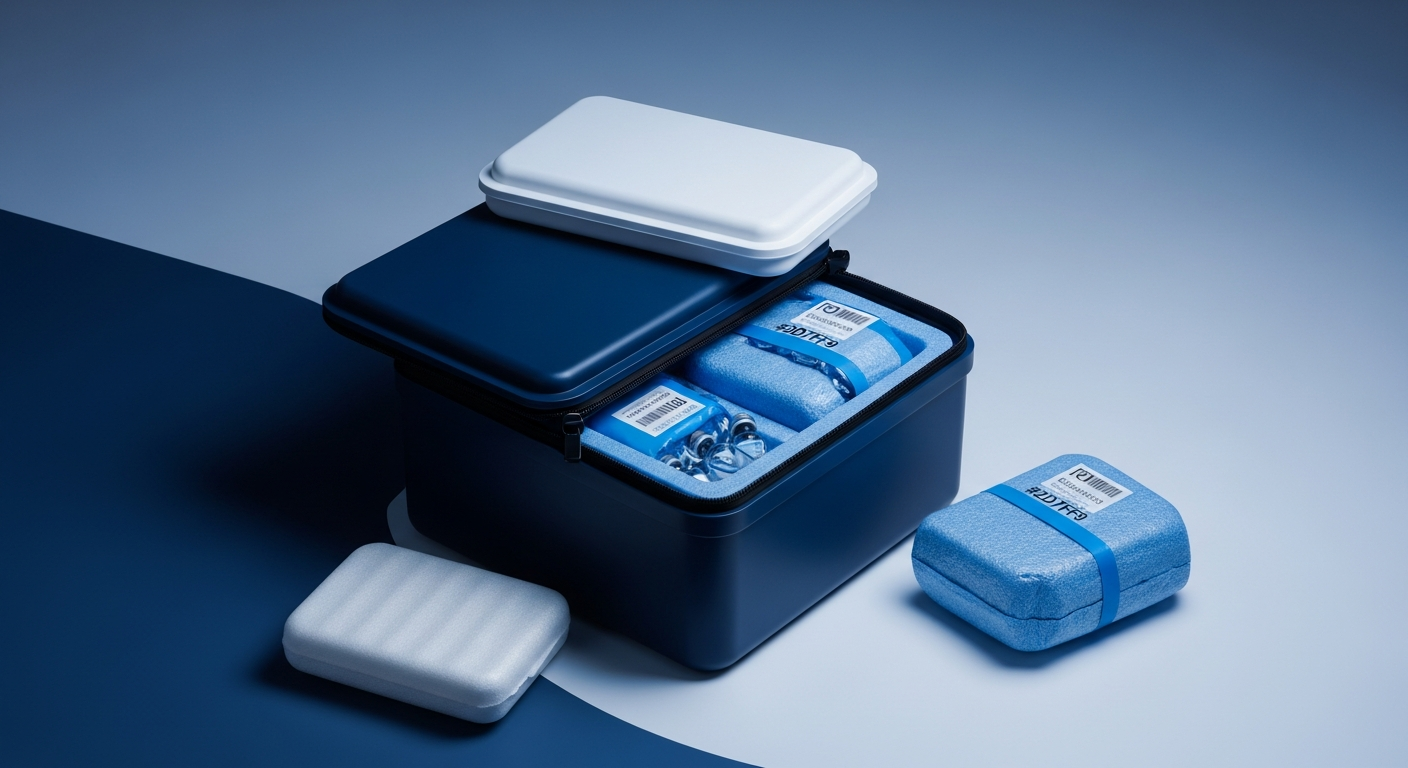
Insulated cold-chain shipping container with cold packs and pharmaceutical vials
Wholesale Peptide Suppliers — cGMP distribution from Tampa, FL.

Peptides are temperature-sensitive. Here's how to make sure your supplier's cold-chain practice protects your inventory.

In this article

  1. Why this question matters in 2026
  2. The fundamentals, in plain language
  3. What good wholesale documentation looks like
  4. Common mistakes operators make
  5. A practical evaluation framework
  6. How to onboard a new wholesale supplier without disrupting operations
  7. How Wholesale Peptide Suppliers approaches this

Why this question matters in 2026

Peptides are temperature-sensitive. Here's how to make sure your supplier's cold-chain practice protects your inventory. This piece is written for clinic owners, medical directors, pharmacist-in-charges, and procurement leads — the people actually signing wholesale POs in 2026.

If you have clinic operations on your roadmap right now, this should save you a few hours of vendor calls.

The wholesale peptide market in 2026 is more crowded, more regulated, and more competitive than it was three years ago. The clinics and pharmacies that have built durable supply relationships did so by treating sourcing as a discipline — not a shopping exercise. State boards have tightened expectations around chain-of-custody documentation, the FDA has sharpened its focus on 503A bulk-substance compliance, and patient-facing platforms are scrutinizing where their compounded peptides actually originate. None of this is a reason to slow growth; it is a reason to source like an adult.

The good news: the operators who get this right tend to keep getting it right, because the work compounds. A clean COA library, a documented backup supplier, and a written supplier-evaluation framework save hours every quarter and pay for themselves the first time a state inspector asks a pointed question.

The fundamentals, in plain language

Before any vendor evaluation, get clear on the fundamentals. The most common reason a wholesale relationship breaks is not price — it is mismatch between what your facility can legally do and what your supplier is actually equipped to deliver. A clinic that orders bulk API by mistake has a regulatory problem on day one. A pharmacy that orders finished-dose vials labeled for office use has a different but equally serious problem.

Read our 503A vs 503B explainer if any of this is new.

  • Confirm your facility type: 503A traditional compounding pharmacy or office-use clinic served by a 503B outsourcing facility.
  • Confirm what documentation your state board or medical board expects on file at all times.
  • Confirm internal storage and cold-chain capability — refrigeration, freezer, monitored excursions.
  • Confirm that whoever places your wholesale orders understands which channel is which and never crosses the line.

That last point is the one that gets glossed over. Train your purchasing person. Put it in writing.

What good wholesale documentation looks like

Documentation is the single most important deliverable from a wholesale supplier. Without it, you have nothing to defend in an inspection. With it, you have everything. A real wholesale supplier publishes a Certificate of Analysis library, will email you a sample COA before you order, and never asks you to take their word for purity claims.

For every lot, expect:

  • Identity — HPLC retention and mass spec confirmation, with the analytical method noted.
  • HPLC purity — quantitative result, ≥99% on key SKUs, with the column, mobile phase, and detection method on the COA.
  • Endotoxin (LAL) — USP <85> result, expressed in EU/mg or EU/vial.
  • Sterility — USP <71> result for finished-dose 503B product.
  • Chain of custody — for bulk API, traceable from manufacturing partner to your receiving dock.
  • Storage and shipping conditions — temperature ranges, monitored excursions, and the courier of record.

Read our guide to reading a Certificate of Analysis for line-item detail. If your current supplier cannot produce any of the above on request, that is the answer to whether you should keep buying from them.

Common mistakes operators make

The five mistakes we see most often, in roughly the order they cause damage:

  1. Treating 503B and 503A as interchangeable. They are not. The legal channels, allowed substances, labeling, and beyond-use dating rules are all different. Cross them and you are exposed.
  2. Accepting a generic COA template without per-lot specifics. If the lot number is missing or the dates do not line up with your shipment date, the COA is decorative.
  3. Single-sourcing a high-demand SKU with no contingency. The first time a manufacturing partner has a backorder, your patient-facing program stops. Always know your backup supplier.
  4. Ignoring cold-chain documentation until the first inspection. Cold-chain is not a nice-to-have; it is a paperwork question.
  5. Selecting on unit price alone instead of total cost of failure. The cheapest gram of API can become the most expensive thing in your facility.

For a deeper dive, see The True Cost of a Bad Peptide Supplier.

A practical evaluation framework

Use a written framework on every supplier call. Score each vendor on the same axes so you can compare them honestly six months later:

  1. Manufacturing source. Named facility, not "our partners". A real supplier will tell you whether the lot was made by a 503B outsourcing facility or sourced as bulk API from a registered manufacturer.
  2. Documentation maturity. Sample COA, sample chain of custody, sample shipping log. If they cannot produce these in 24 hours, walk.
  3. Quality systems. Written SOPs, a complaint procedure, a recall procedure. Ask to see the table of contents.
  4. Supply reliability. Backup-supply contingency. What happens to your account when their primary partner has a 30-day backorder?
  5. Account management. One named contact, U.S. business hours, and an actual phone number that gets answered.
  6. Compliance posture. Licensure verification on every account, clear channel rules, and a willingness to say no to orders that do not fit.

Our peptide supplier checklist formalizes this into 12 questions you can paste into your next vendor call.

How to onboard a new wholesale supplier without disrupting operations

Switching wholesale suppliers is operationally disruptive if you do not plan it. The cleanest path is a 60-day overlap: keep the incumbent active while you onboard, place a small qualification order with the new supplier, validate documentation against your standards, and migrate volume only after the COAs and shipping records pass internal review. Do not rip out a supplier mid-quarter unless you have to.

During the qualification period, ask your new supplier for sample COAs across two or three different lots, not one. Inconsistency between lots is information. Consistency across lots — same analytical method, same purity claims, same release criteria — is the kind of signal you cannot fake. Document everything you receive, store the sample COAs, and add the supplier to your internal approved-vendor list only after the paperwork survives scrutiny.

How Wholesale Peptide Suppliers approaches this

We are a Tampa, FL distributor sourcing through cGMP-aligned manufacturing partners. Our 503B finished-dose channel serves licensed medical clinics; our 503A bulk API channel serves compounding pharmacies. Every lot ships with a per-lot Certificate of Analysis. Onboarding takes 1–2 business days after we verify licensure and DEA registration where applicable.

We are not the cheapest supplier in the market. We are built to be the easiest one to defend in front of your medical director, your pharmacist-in-charge, and your state board. If that lines up with how you run your facility, apply for a wholesale account or call us at 787-822-8197.

Frequently asked questions

Clinic owners, medical directors, pharmacist-in-charges, and procurement leads at licensed U.S. clinics and pharmacies sourcing wholesale peptides.

Yes. We supply 503B finished-dose product to licensed medical clinics and 503A bulk API to compounding pharmacies. Onboarding takes 1–2 business days after we verify licensure.

Browse our searchable COA library at /quality/coa-library/. Production COAs are delivered with every order to verified accounts.

WPS
Wholesale Peptide Suppliers

cGMP wholesale peptide distribution for licensed U.S. medical clinics and compounding pharmacies. Tampa, FL.


Related reading

Sourcing wholesale peptides?

Apply for a wholesale account or request pricing. We respond within 1–2 business days.

Apply for Wholesale Request Pricing
Call Apply for Wholesale