
How to Read a Peptide Certificate of Analysis
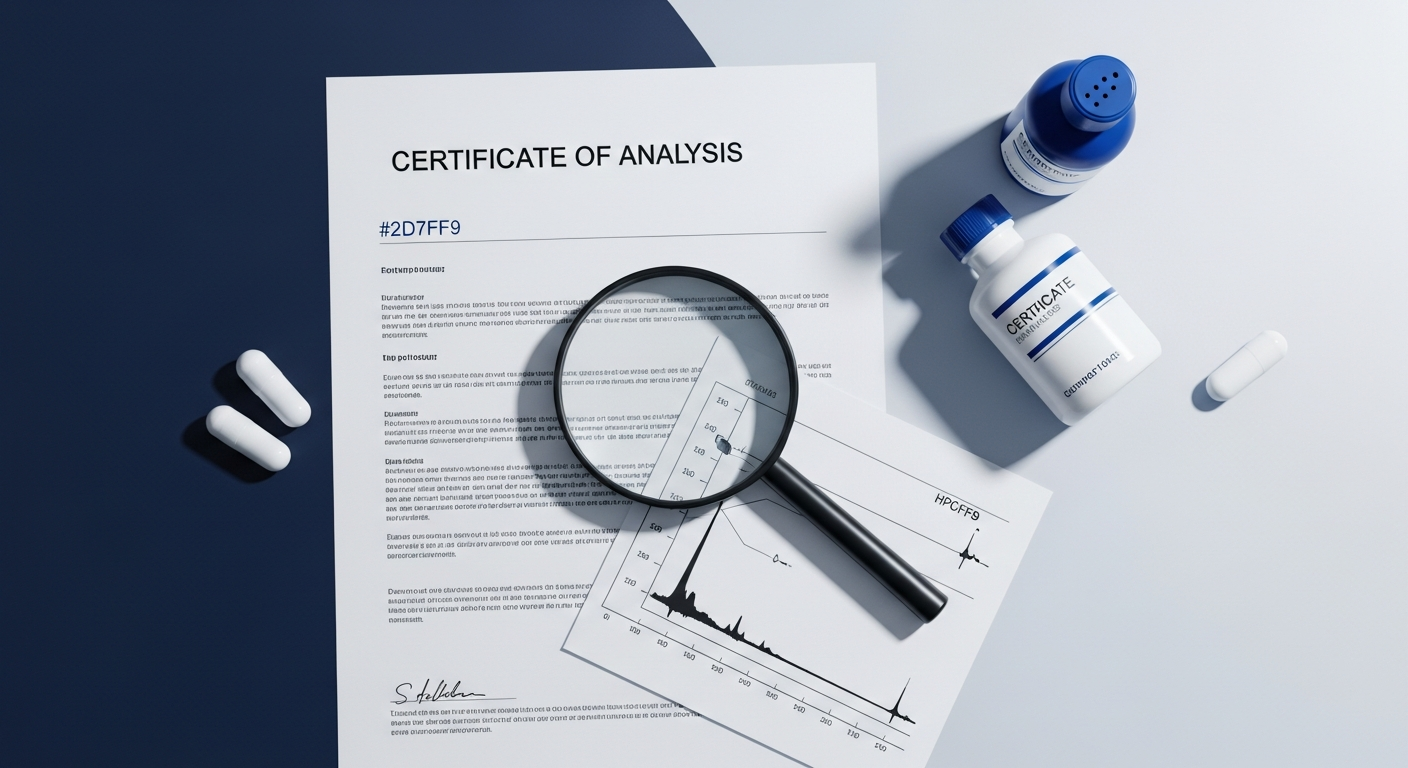
Review lot identity, methods, specifications, purity, strength, and test scope so a peptide COA supports purchasing decisions without overstating what it proves.
For facility-specific purchasing requirements, visit our longevity clinics sourcing guide. This article covers procurement, not treatment protocols.
Match the document to the received lot
Check product identity, source, lot number, report identifier, dates, and the entity issuing the report. Resolve mismatches before releasing inventory. A sample qualification report is not the release record for a later shipment.
Read the specification beside the result
A number has meaning only with its test method, units, acceptance criteria, and material being tested. Determine whether the report concerns bulk ingredient or the finished preparation. An ingredient COA does not establish the condition of a finished vial.
Separate identity, purity, and strength
Identity testing addresses what the material is. Chromatographic purity describes a method-dependent result. Assay or strength evaluates the amount of the relevant substance. These answers are related but not interchangeable; ask the qualified reviewer to resolve ambiguous methods or units.
Read our HPLC purity testing guide for more detail on interpreting purity results.
Look for the tests the preparation requires
For sterile preparations, sterility and endotoxin considerations are separate from purity. Do not infer an unlisted test was performed. Request the applicable finished-product quality records and have the quality reviewer assess the evidence.
Resolve discrepancies and retain the decision
Hold inventory with unexplained lot differences, missing results, or inconsistent specifications. Save the supplier response and reviewer’s release or rejection decision with the purchase record. A COA does not establish FDA approval, legal eligibility, or a treatment’s effectiveness.
What to do next
Record unresolved questions and the evidence your clinical or quality reviewer needs before ordering. Use the longevity clinics purchasing page to prepare a facility-specific inquiry. Product mentions do not confirm stock, a legal supply pathway, or suitability for patient care.
Regulatory sources and purchasing limits
Compounded drugs are not FDA-approved. Facility registration does not establish approval or eligibility for every preparation. Verify the exact product, source, applicable federal requirements, and state rules before ordering. This is procurement education, not medical or legal advice.
- FDA: bulk substances used under section 503B, including restrictions and interim policies.
- FDA: GLP-1 compounding and shortage updates.
- FDA: safety concerns for certain compounding substances.