
Bulk API Chain of Custody: From Manufacturer to Pharmacy
A certificate of analysis describes a tested sample. A chain-of-custody file connects that evidence to the material your pharmacy actually receives. The goal is to explain where the API came from, who handled it and how its identity was preserved.
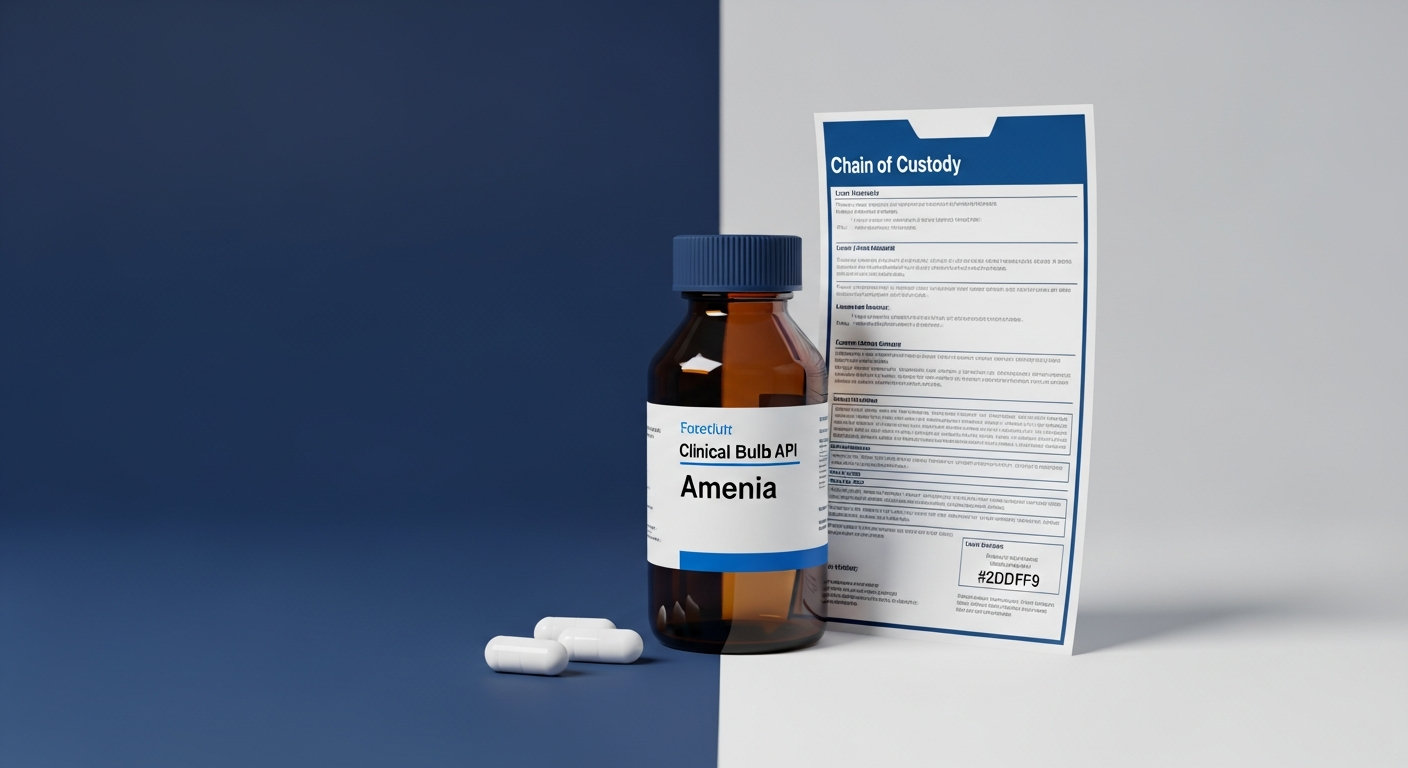
Map every organization in the supply path
Identify the original manufacturer, any repackager or relabeler, the distributor and the receiving pharmacy. Ask which party performed each activity. A distributor’s invoice is not a substitute for manufacturer identity, and a shipping company is not necessarily the material’s seller or quality-release authority.
Reconcile the lot numbers
Compare the manufacturer lot on the COA with the labels, packing list and receiving record. If a repackager assigns a new identifier, obtain a documented mapping back to the original lot. A different label number is a question to resolve, not proof of fraud—but an unexplained mismatch should prevent release.
Link the COA to the shipment
Review the substance name and form, lot, specification, methods, results, dates and issuing organization. Confirm what the report actually covers. An API COA does not establish the sterility or release status of a finished compounded preparation. Use the COA reading guide for the distinction between identity, purity and other tests.
Document transfers and transport
Retain the purchase order, invoice, packing list, shipment identifier and available custody or repackaging records. Match quantities and container counts. Check the manufacturer’s documented storage requirements and any agreed transport conditions; do not assume every API needs the same temperature range. Keep available excursion evidence with the receiving decision.
Use a receiving checklist before release
At receipt, record the date, receiver, shipment reference, container count, lot identifiers, label condition and seal integrity. Compare these with the expected order. Record any required temperature evidence and the person authorized to make the disposition decision. The receiving team should know how to keep questioned stock separate from usable inventory.
Quarantine discrepancies until resolved
If a COA is missing, a seal is damaged or a lot cannot be reconciled, segregate the material and open a documented supplier query. Keep photographs and correspondence as appropriate. Release, return or reject through your quality process with a named approver. Do not rely on a verbal assurance or edit a supplier document to make it match.
Test whether a recall can be traced
As a documentation exercise, select a received lot and identify its supplier records and any downstream compounding records that reference it. Follow your applicable retention and privacy requirements. Gaps found during an exercise are easier to correct before a real complaint or recall. This is a suggested check, not a claim about our recall performance.
Keep traceability separate from eligibility
A complete paper trail does not make an ineligible substance eligible. Pair this receiving workflow with the 503A substance eligibility checklist. See our compounding pharmacy purchasing page and pharmacy sourcing hub when preparing documentation questions for a supplier.
Sources and limits
FDA: section 503A bulk-substance requirements. The receiving controls above are a practical review framework, not a substitute for your pharmacy’s quality procedures, current law or product-specific instructions.